
5 Reasons Medical Office Cleaning Requires Specialized Expertise
By David Beatty | September 2, 2026
Healthcare facilities operate under uniquely demanding conditions where standard sanitation methods prove entirely insufficient for maintaining public safety. Clinical environments encounter a continuous flow of patients, medical personnel, and visitors, creating high volume traffic that introduces diverse microscopic threats into waiting rooms, examination areas, and administrative corridors. Unlike traditional commercial spaces where surface cleanliness primarily serves an aesthetic function, healthcare settings require rigorous infection control strategies aimed at neutralizing unseen biological hazards. Every physical touchpoint, from registration counters to diagnostic equipment, represents a potential vector for cross-contamination if not subjected to continuous, specialized decontamination protocols designed specifically for healthcare environments.
To achieve and maintain these stringent hygiene benchmarks, healthcare administrators must engage dedicated specialists who possess an in-depth understanding of clinical sanitation dynamics. Professional medical office cleaning services provide the structured methodology and technical oversight necessary to establish a truly hygienic environment for patient care. These specialized solutions encompass systematic surface disinfection, advanced indoor air management, and strict adherence to mandatory health regulations. By implementing comprehensive environmental sanitation routines, medical facilities successfully protect vulnerable patient populations, reduce occupational exposure risks for staff members, and preserve the physical integrity of sensitive medical infrastructure across every department.
1. Eliminating Microscopic Pathogens Through Advanced Sanitation
Pathogen transmission within clinical settings presents a persistent challenge that demands sophisticated, multi-layered defensive strategies. Microorganisms such as bacteria, viruses, and fungi can survive on dry surfaces for extended periods, waiting to be transferred via direct contact or airborne dispersion. High-touch surfaces including door handles, light switches, examination tables, and chair armrests require systematic decontamination to break the chain of infection. Specialized sanitation teams utilize comprehensive knowledge of transmission pathways to target critical surfaces, ensuring that harmful microbes are neutralized before they can affect incoming patients or healthcare workers during routine daily operations.
Executing effective decontamination routines requires far more than casual surface wiping; it demands strict adherence to precise chemical application rules and required wet contact times. Utilizing skilled medical office cleaning services ensures that facility maintenance staff apply EPA-registered, hospital-grade disinfectants capable of eradicating resilient pathogens such as Clostridioides difficile and Methicillin-resistant Staphylococcus aureus. Furthermore, cleaning personnel receive comprehensive instruction regarding bloodborne pathogen standards, equipping them to manage biohazardous materials and bodily fluid spills safely. This disciplined approach eliminates microscopic reservoirs while maintaining a safe, sterile atmosphere throughout the entire clinical property.
2. Adhering to Strict Healthcare Regulatory Standards
Regulatory oversight in healthcare environments is designed to protect public health and ensure high standards of environmental safety across all patient care areas. Agencies such as the Occupational Safety and Health Administration enforce strict rules regarding workplace safety, chemical exposure management, and bloodborne pathogen containment. Medical facilities must maintain total compliance with these detailed standards to ensure worker protection and avoid severe regulatory consequences. Failure to meet federal guidelines can result in substantial administrative fines, legal liabilities, and operational suspensions that disrupt clinical care and damage the professional reputation of the healthcare organization.
In addition to workplace safety mandates, recommendations published by the Centers for Disease Control and Prevention set the gold standard for clinical infection prevention. Dedicated providers of medical office cleaning services maintain exhaustive documentation and detailed record-keeping systems to verify full compliance with all relevant federal, state, and local guidelines. Through regular quality assurance audits, continuous protocol reviews, and proactive education regarding updated health codes, specialized cleaning specialists assist healthcare facilities in navigating complex regulatory frameworks while maintaining an uncompromised standard of environmental sanitation across every department.
3. Deploying High-Performance Equipment for Decontamination
Modern clinical sanitation relies heavily on state-of-the-art technological tools engineered to eliminate environmental contaminants that traditional tools simply cannot remove. High-Efficiency Particulate Air filtration systems play a central role in preserving indoor air quality by capturing microscopic airborne particulates, pollen, and dangerous bio-aerosols. Additionally, non-chemical disinfection solutions, such as germicidal ultraviolet light equipment, provide rapid pathogen eradication by disrupting the nucleic acids of bacteria and viruses on exposed surfaces, offering superior supplemental decontamination in sensitive treatment areas, laboratory spaces, and surgical suites.
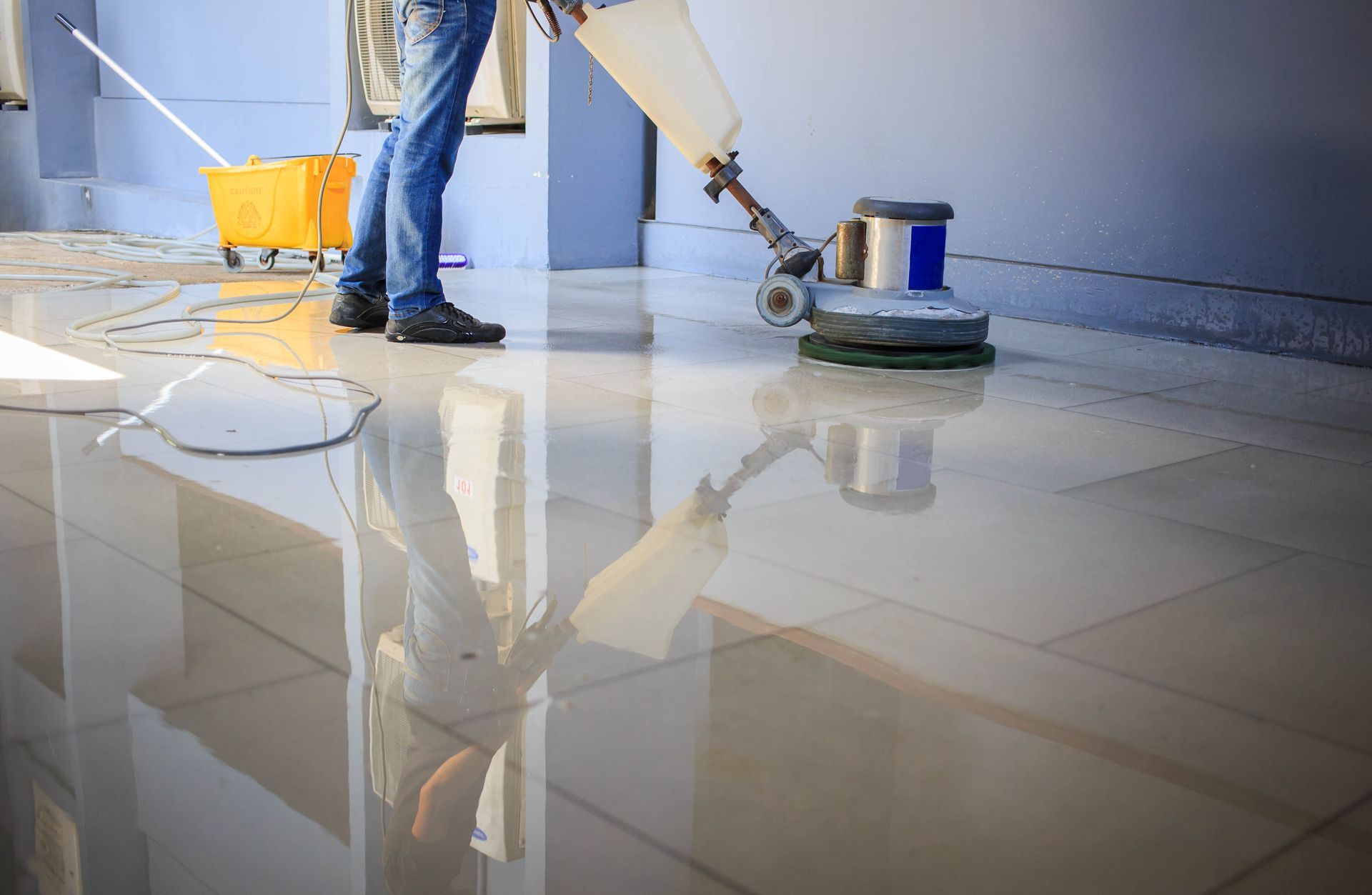
Electrostatic disinfection technology further elevates surface sanitation by applying an electrical charge to liquid disinfectants, allowing the fine chemical mist to coat complex three-dimensional surfaces evenly. Engaging qualified medical office cleaning services guarantees that this sophisticated equipment is operated by trained technicians who understand correct application techniques and safety protocols. Proper equipment management extends to specialized floor care routines designed for sensitive healthcare environments, where high-performance floor scrubbers and specialized sanitizing agents maintain pristine flooring surfaces without causing physical degradation or leaving hazardous chemical residues behind.
4. Managing Environmental Risks and Facility Safety
Effective risk management within medical facilities begins with comprehensive hazard identification and proactive site risk evaluations. Cleaning specialists evaluate facility layouts to identify potential biological, chemical, and physical hazards, including cross-contamination points, liquid spill areas, and high-traffic friction zones. Recognizing these environmental vulnerabilities enables facility directors to establish customized risk reduction strategies that prevent workplace accidents, minimize chemical exposure risks, and protect both healthcare personnel and visiting patients from preventable harm during daily operations within the facility.
Comprehensive safety training programs ensure that cleaning personnel are fully proficient in executing emergency response procedures, managing hazardous materials, and correctly donning personal protective equipment. Contracted medical office cleaning services establish structured incident reporting protocols and continuous quality feedback systems to document operational anomalies and resolve minor safety concerns before they escalate. By implementing structured emergency preparedness plans and maintaining transparent communication channels, cleaning specialists support a culture of continuous safety and operational reliability throughout the entire healthcare infrastructure.
5. Elevating Patient Satisfaction and Financial Sustainability
A clean physical environment directly influences patient perception and overall confidence in the quality of clinical care provided by a medical practice. When patients enter a facility with spotless reception areas, immaculate restrooms, and fresh indoor air, they instantly feel comfortable and reassured regarding the professional standards of the medical staff. Eliminating persistent odors and maintaining visual cleanliness alleviates patient anxiety, fosters positive community reviews, and reinforces a facility's commitment to delivering superior, patient-centered care in a safe, welcoming healthcare setting.
Investing in specialized environmental maintenance delivers substantial long-term financial advantages by extending facility asset lifespans and preventing costly infection outbreaks. The benefits of preventing infections and maintaining compliance contribute to the facility's overall financial health. According to Technavio, the U.S. commercial and residential cleaning services market is projected to increase by $41,662.3 million between 2026 and 2030. This detailed evaluation underscores the intrinsic value of specialized cleaning services. Partnering with professional medical office cleaning services maximizes financial returns while protecting critical equipment and supporting long-term administrative stability.
Maintaining high hygiene standards and regulatory compliance in healthcare facilities requires specialized expertise, continuous staff training, and advanced technological solutions. Standard commercial maintenance routines cannot deliver the level of deep disinfection required to neutralize microscopic pathogens, protect vulnerable patients, and maintain safe working conditions for medical personnel. By investing in dedicated clinical environmental management, healthcare practices safeguard their patients, preserve administrative resources, and uphold the highest standards of professional medical care across all clinical areas.
Selecting an experienced partner for your facility maintenance strategy is essential for achieving consistent regulatory compliance and superior environmental sanitation. Specialized
medical office cleaning services deliver the tailored solutions, certified expertise, and rigorous quality assurance necessary to keep modern healthcare facilities safe, efficient, and welcoming. Contact Clean Sweep Janitorial Supply Co today to schedule a comprehensive evaluation of your facility's environmental maintenance program and discover how custom clinical sanitation strategies can enhance your operational excellence.

Share On: